


compare multiple quotes from Agreed Suppliers
- Save time and money by letting us do the legwork for you
- We will look at the most suitable and competitive providers for you
- Our expert service is 100 % free with no-obligation
- Get the options to make an informed decision and get the best deal
Vending machines – Buying guide
Our most read Vending machines articles

Find all our Vending machines articles
-
-
Financing your vending machine
- Renting a vending machine
- Purchasing a vending machine
- Cost of vending machines - and how the business actually works
-
There are two reasons to invest in vending machines for your business premises: to offer refreshments to visiting customers or business partners, and to keep your staff from wandering off site in search of a drink or a snack during working hours.
Offering a beverage or snack to visitors is probably the most cost-effective way to make a good first impression. As for employees – who spend hours a day on site and may require an occasional coffee or cold drink – if you don’t provide the goods they will go off site to satisfy their craving. Even a few minutes per day per employee can add up to a lot of non-productivity.
Choosing your vending machine: basic criteria
Do you need hot drinks, cold drinks, or snacks? Chances are that all three would be welcome, but you can easily find out what is really necessary by taking a quick poll of your staff. Once your choice is settled there are certain selection criteria which apply to most if not all vending machines.
- Volume: how many people will use the machine each day? If you run an auto repair shop you may only need a simple coffee or cold drinks vending machine for your mechanics and waiting customers. If however your business has dozens of employees and frequent outside visitors, look for high-capacity vending machines to avoid the need for constant refilling.
- Selection: an office coffee machine should offer tea and cocoa as well as specialty coffees like espresso and cappuccino. A cold drinks vending machine should offer water as well as soft drinks and juices. And a snack vending machine should offer a range of confectionaries, crisps and sandwiches to satisfy all tastes.
- Price: rounding drinks and snacks prices to the nearest whole pound will facilitate purchases and reduce the change-making burden on your vending machine.
- Payment: for cash vending machines choose one that accepts coins as small as 5p. and notes up to £10 to ensure that anyone can purchase a drink or snack with pocket change. You can also choose card vending machines that load credit on payment cards which can then be used to make purchases. And mobile swipe technology is beginning to make inroads with vending machines.
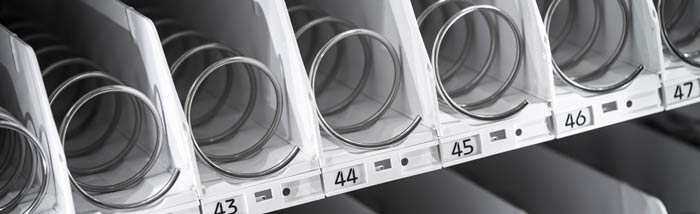
- Delivery: hang and drop is out: most modern vending machines deliver with a spiral coil that pushes items off a rack, or with a conveyor system that brings the delivery bin up to the selected item rather than sending it down on the fly. These innovations reduce theft (as well as broken cookies).
- Security: insist on thick glass displays, heavy-gauge metal frames with locking mechanisms at multiple points, and a delivery bin that seals off the cold drinks or snack selection area when the user opens it to retrieve his purchase.
Still not sure?
Your business is unique, and your vending machine needs may be particular. The best way to choose the right vending supplier is to research and compare offers. The form at the top of this article is a great place to start; just tell us what you need and you will receive multiple no-obligation quotes within 48 hours from carefully qualified vending machine suppliers.